
The Hidden Costs of Hyperscale Data Centers: Questions Local Governments Should Ask Before Approval

Updated: Jun 2
Why tax revenue projects alone may overlook infrastructure, water, and long-term public costs
As hyperscale data centers expand into rural and suburban communities across the United States, local governments are increasingly presented with promises of jobs, tax revenue, and economic growth. However, traditional economic development analyses often fail to account for infrastructure strain, water consumption, electricity burdens, and long-term environmental costs.
This executive brief outlines key questions public officials should ask before approving large-scale digital infrastructure projects. It is derived from analyses our team conducted as part of an evaluation for a data center that is planned to be built in North Carolina.
Why This Matters
The rapid expansion of cloud computing and artificial intelligence has accelerated demand for hyperscale data centers nationwide. Communities are being approached with proposals that promise:
billions in private investment
increased property tax revenue
construction employment
regional economic growth
While these benefits may be real, local governments often receive limited information about:
long-term electricity demand
water requirements
transmission upgrades
backup power systems
tax incentive structures
community-level environmental burdens
Many local jurisdictions lack internal capacity to independently evaluate these projects before zoning approvals or incentive negotiations occur.
What Makes Hyperscale Facilities Different?
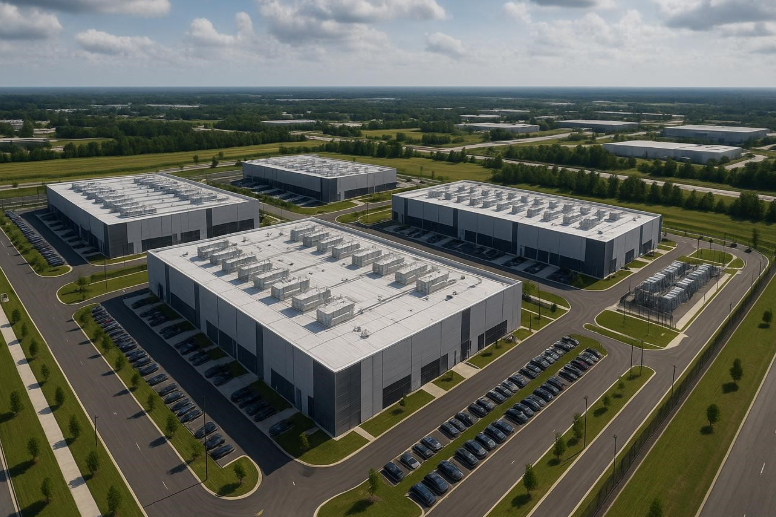
Unlike traditional commercial developments, hyperscale data centers often require infrastructure comparable to small cities.
Examples include:
hundreds of megawatts of electricity demand
millions of gallons of water annually
new transmission infrastructure
backup diesel or natural gas generation
large land footprints
long-term utility contracts


Five Questions Every Community Should Ask
Who pays for electricity infrastructure upgrades?
Large facilities often require:
Substations
Transmission upgrades
Distribution improvements
If utilities recover these costs through general rate structures, residents may indirectly subsidize private development.
How much water will the facility require?
Cooling systems can consume significant water resources depending on design.
Questions to ask:
What cooling technology will be used?
What is daily water demand?
Are drought contingency plans in place?
Will local ratepayers fund infrastructure expansion?
What tax incentives are being offered?
Many states, including North Carolina, offer substantial sales tax exemptions for data center equipment and electricity purchases.
Communities should ask whether projected tax revenues reflect these exemptions.
Are backup power systems creating additional environmental burdens?
Many newer facilities are proposing:
on-site natural gas generation
diesel backup generators
battery infrastructure
These systems create local air quality concerns.
Who bears long-term risks if market conditions change?
Questions include:
What happens if AI demand slows?
Who pays for stranded infrastructure?
What happens if expansion phases never materialize?
What Local Governments Need Before Approval
Before approving hyperscale facilities, communities should require:
✔ Independent utility impact studies
✔ Water demand disclosures
✔ Transparent tax incentive reporting
✔ Environmental impact reviews
✔ Emergency power disclosures
✔ Long-term community benefit agreements
✔ Independent third-party economic analysis
Digital infrastructure is increasingly essential to modern life, but communities should not approve large-scale projects without understanding their full long-term costs.
Strong economic development decisions require transparency, independent analysis, and full-cost accounting.
Need independent infrastructure analysis?
Key Environmental Consulting helps communities, utilities, and public agencies evaluate large infrastructure proposals through:
GIS Analyses
Community Engagement Strategies
Infrastructure Impact Assessments
Environmental Cost Modeling
Community Impact Analysis
Strategic Planning Support
Contact us at info@keyenvi.com to discuss independent project review services.


Comments